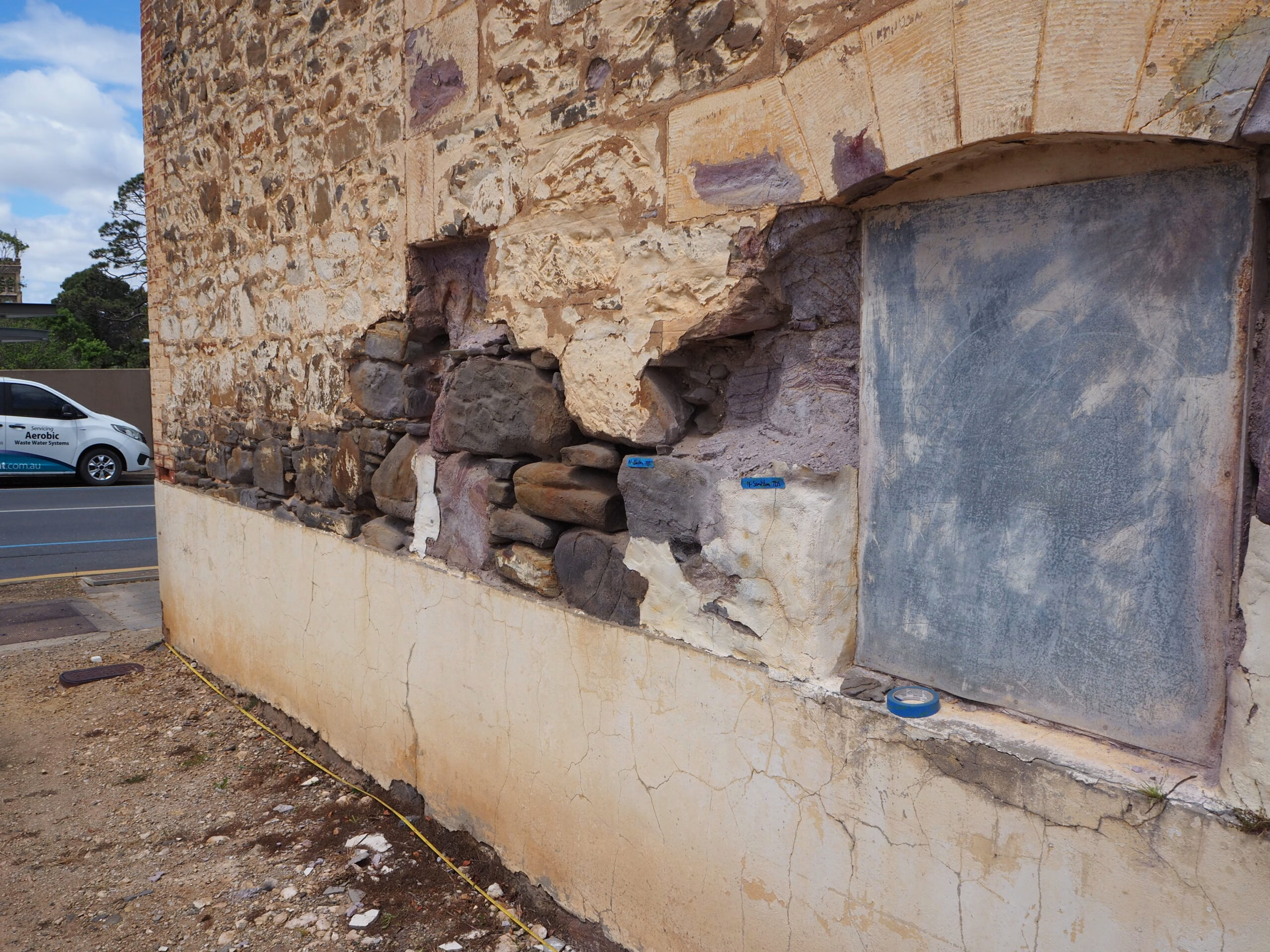
Understand the effects of rising damp and salt attack, know how to spot the signs of damage and learn what’s required in a remediation plan.

Article by Mark Milevski

Rising damp is a serious matter that can cause significant damage to a building’s structure and lead to health issues due to mould growth. To minimise these deleterious effects, signs of rising damp – such as deteriorating stone or render, flaking paint and musty smells – should be investigated promptly.

Rising damp involving soluble salts can lead to salt crystal growth resulting in a mode of decay commonly known as salt damp. This article explores the process and effects of rising damp and salt attack, signs to look out for in your structure, and how testing and analysis by Stone Initiatives can help to determine the severity of the problem.

What is rising damp?

Rising damp is the process of moisture from the ground (groundwater or surface water) travelling upwards through the masonry by capillary action (often walls that have inadequate damp proofing). The water is effectively absorbed up through the porous masonry wall like water into a sponge, or oil into a wick. If left unaddressed, rising damp can weaken the walls and foundation of a building, which can lead to serious and costly damage. 

What are the effects of rising damp? Is it dangerous?

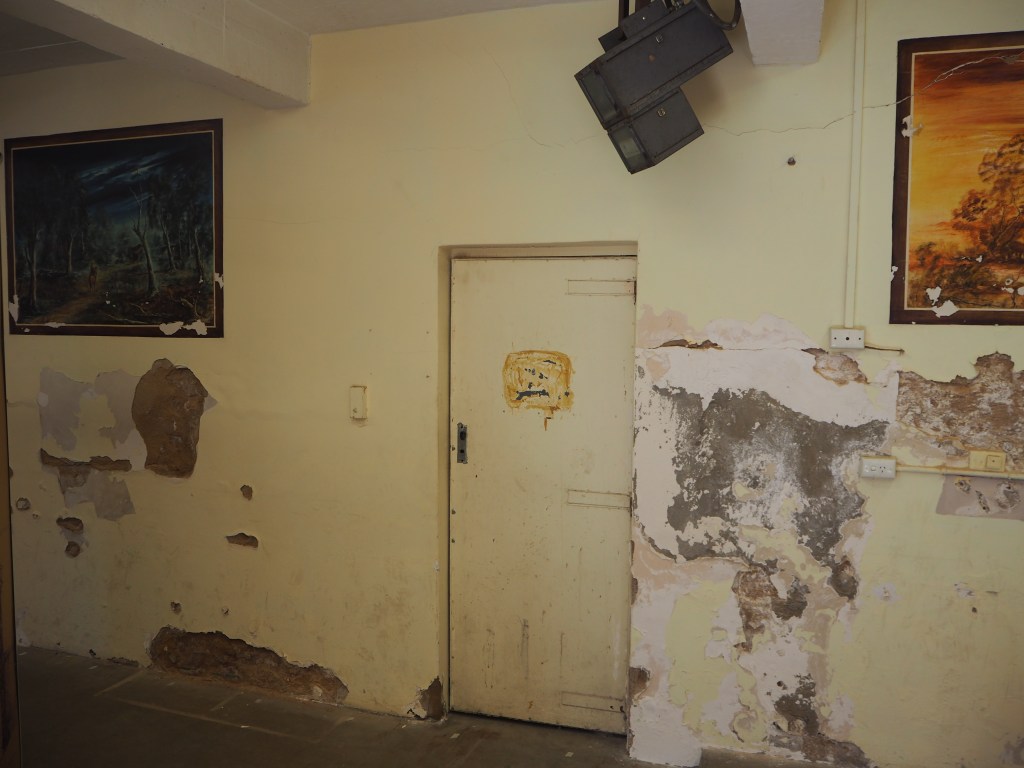
The presence of damp can cause materials to deteriorate, paint to flake, bubble and peel, plaster to soften, nails to rust, timber to rot, and mould and mildew to grow. When salts are also present (see ‘What is salt attack?’ below), masonry can decay, which may result in structural instability. Without proper remediation, the effects of rising damp and salt attack can be disastrous to a building, leading to expensive repairs. In addition to structural danger, mould and mildew in internal walls can lead to personal respiratory illness and other health hazards. 

What are the signs of rising damp?

Rising damp signs include:

Stone Initiatives performed testing and analysis at the remand wing of Old Adelaide Gaol, damaged by salt damp. The investigation included a moisture survey to determine the source and extent of the moisture, testing to determine levels of salt present, and development of a remediation plan.

What causes rising damp?

Events that may lead to rising damp include poor drainage, overwatering, overspray, poor ventilation, landscaping and design deficiencies, poor maintenance, and the use of inappropriate coatings and membranes that prevent evaporation from the walls.

Other sources of moisture:

What is salt attack?

“Salt attack” describes damage to dimension stone through salt crystal growth. It is a serious issue, and many iconic buildings and monuments, such as the Sistine Chapel and the Egyptian Pyramids, have decayed because of salt damage. Salt attack is largely thought to occur via two mechanisms: crystal growth (a build-up of crystallization pressure) and changing hydration states. The porosity and strength of the stone play a large part in controlling the extent of salt damage. You can learn more about salt attack in our article “Understanding Salt Attack in Dimension Stone.” 

What is salt damp?

Salt damp is a term that combines “salt attack” and “rising damp.” It is used to describe a type of damage to buildings, particularly in older structures, caused by the accumulation of salt, often in porous masonry walls, foundations or flooring structures that do not have adequate damp proofing. This can occur as a result of rising damp, where groundwater (or surface water) containing high levels of salt is drawn up into the walls, causing the salt to crystallize and damage the porous masonry. Effectively the processes of rising damp and salt attack are combined. 

Salt damp particularly prevalent in Adelaide due to shallow underground streams and high salt content within the soils. Many of the city’s original buildings were constructed with a hot-laid bitumen damp course at the base to protect it from rising damp. Over time the bitumen breaks down and allows moisture to rise. Stone Initiatives has carried out many moisture surveys on heritage buildings with rising damp issues in Adelaide, and around Australia.

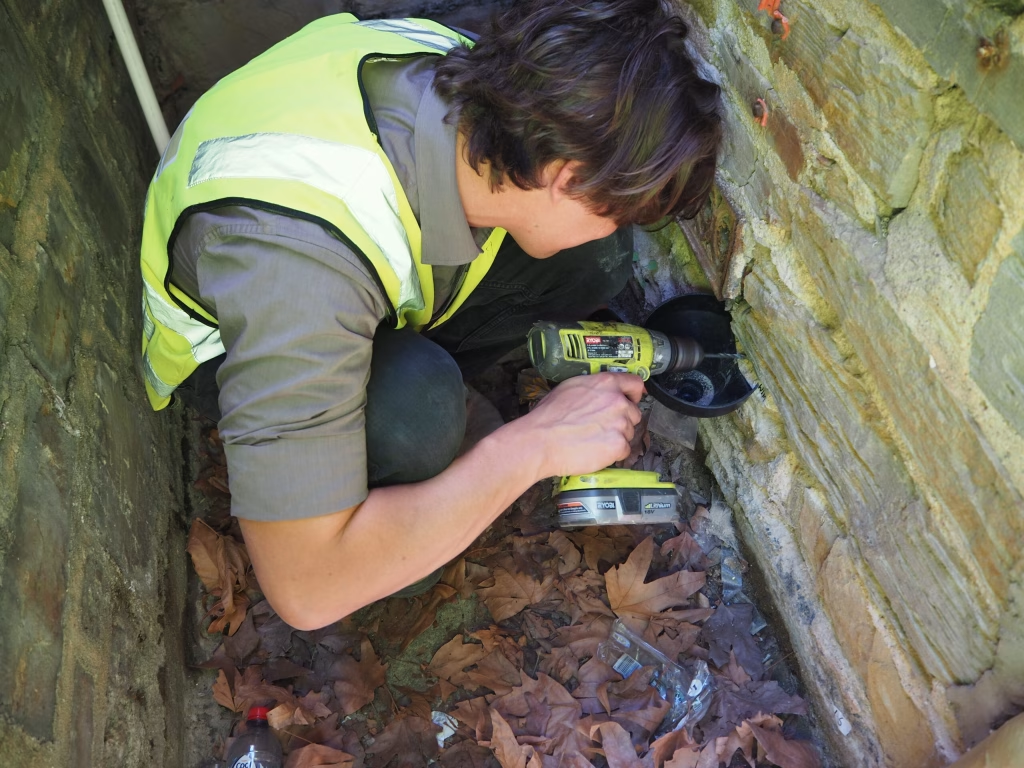
Stone Initiatives materials testing specialist obtaining drilling samples from a heritage wall for salt content testing.

How does Stone Initiatives detect rising damp and salt attack?

Example of a moisture survey presented as a heat map. The red indicates very high levels of moisture.
Stone Initiatives technician performing soluble salt testing.

How can you fix rising damp or salt damp?

It’s recommended to consult a professional builder or damp proofing specialist for an appropriate rising damp treatment. Stone Initiatives can help you determine the severity and extent of rising damp or salt damp, which can aid in developing a remediation plan. 

To fix rising damp or salt damp, the following treatments can be considered:

In the repair of a building damaged by rising damp or salt attack, Stone Initiatives can perform testing that determines the durability of any replacement stone using the resistance to salt attack test. The test is useful in selecting a stone with the required durability but with a mode of decay that matches the existing stonework.

Sandstone samples that have undergone resistance to salt attack testing. Note the various forms of decay.

Maintenance and prevention tips

It’s important to address rising damp as early as possible, as it can cause significant damage to the building structure and create health issues due to mould growth. A specialist such as Stone Initiatives should be engaged to determine the severity and extent of rising damp or salt damp, which can aid in developing a remediation plan with a professional builder or damp proofing specialist.