
MINERALOGICAL EXAMINATION
Stone Initiatives can facilitate testing to analyse the composition of any dimension stone. Our specialist technicians can perform a wide range of mineralogical tests to analyse your dimension stone for the presence of naturally occurring asbestos minerals, crystalline silica, or other potentially deleterious mineral components.
Stone analysis techniques
Mineralogical examination and compositional analysis techniques include:
• Petrographic examination
• X-Ray diffraction (XRD)
• Polarised light microscopy
Identifying features of concern
We can carry out these tests to determine the mineral composition, textural features, geological name, and commercial stone classification for marketing purposes. The tests can also identify potential features of concern before the stone is installed in a large project. Our team can even use these analyses as a tool to assist in determining the cause of a stone failure, such as cracking or warping.
Petrography and higher risk features in stone
Petrography is the study of rocks, or dimension stone, in thin section by means of a petrographic microscope. Typically, a petrographic examination is used to supplement other physical property testing of dimension stone. In large projects, it can assist in identifying any potentially sensitive features inherent to the stone type. This ultimately informs the client about higher risk features and how these may affect the stone in service.

“Testing ceramic tiles is essential because it verifies how the product will perform in real-world conditions, particularly in terms of durability, safety, and compliance with Australian Standards. In practice, we often find that overseas test data can be outdated, not aligned with local requirements, or not truly representative of the specific tiles being supplied, which can introduce unnecessary risk if relied on in isolation.
“Understanding what a stone is comprised of is the first step to understanding how that stone will behave in different applications and environments. A stone with high quantities of mica minerals will be far weaker than a stone comprised of predominantly quartz. At Stone Initiatives, our trained experts are able to examine, identify and interpret mineralogical data to provide you with a clear insight into what applications are suitable for your stone.”
Ted Schmaal
Scientific Officer – Geologist
Asbestos minerals in stone
The above stone analysis test methods are very important for projects involving stone types that are at a higher risk of containing asbestiform minerals. Likewise, they are important for projects where crystalline silica quantity is controlled for all materials to be used. These tests can be targeted to detect the presence of and identify the proportion of these deleterious/hazardous components within a stone sample. Asbestos mineral fibres pose a significant health hazard when in a respirable form and inhaled or ingested. There are six main minerals that can form asbestiform fibres: tremolite, actinolite, chrysotile, crocidolite, amosite and anthophyllite.
Images
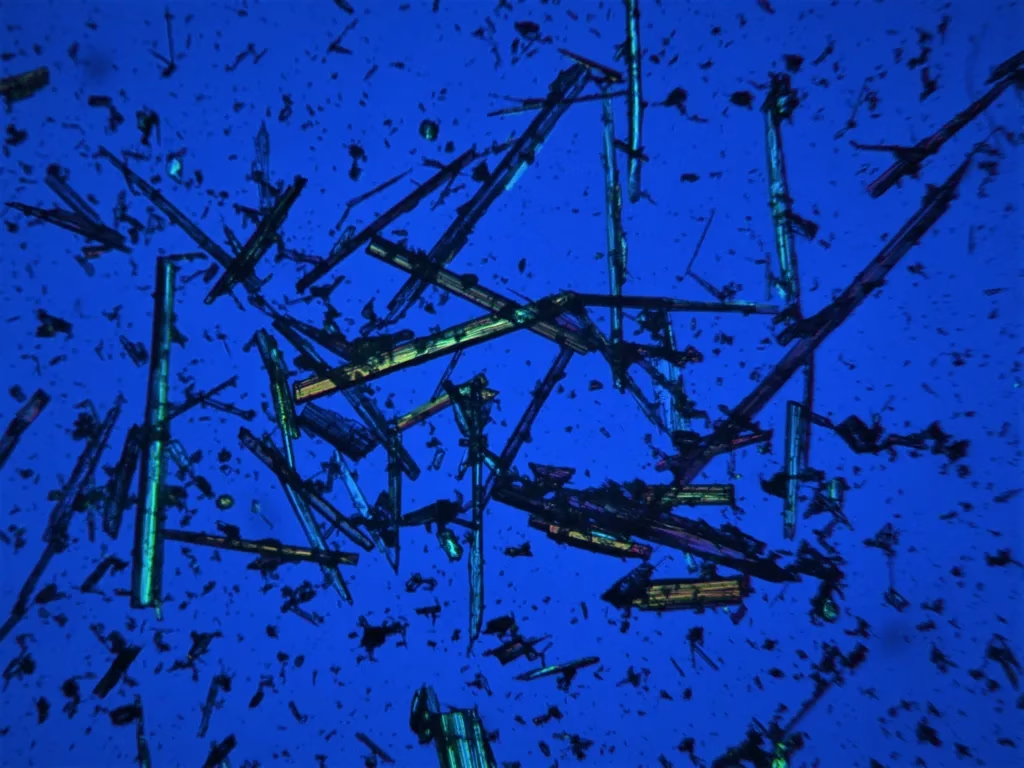
1. Photomicrograph of tremolite asbestos crystal ‘aggregates’ in fibrous / elongate form when viewed using polarised light microscopy (Magnification 100x). Cross-polarising filter inserted.
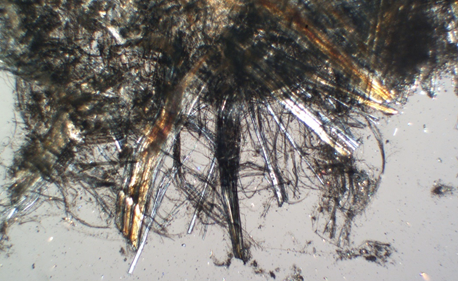
2. Photomicrograph of a cluster of asbestiform chrysotile fibres intermixed with other various minerals as viewed under a polarising light microscope as part of the petrographic examination.
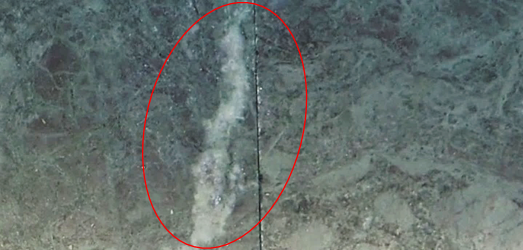
3. A piece of polished ‘green marble’ serpentinite. Often, green marbles contain a high quantity of serpentine group minerals such as chrysotile.
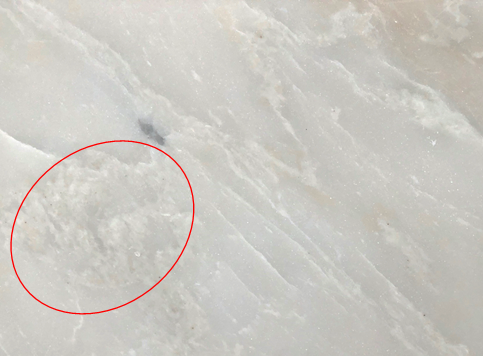
4. A piece of polished veined white marble. The circled area is a patch of a fibrous-looking material that was found to be mostly comprised of tremolite.
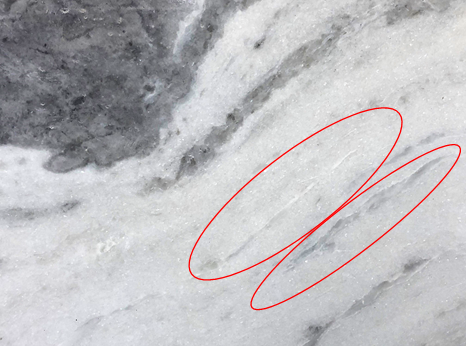
5. In white-coloured marbles, it is common for NOA tremolite to be identified in features such as opaque white veins or grey-white veins (circled) that look different to the surrounding stone.