
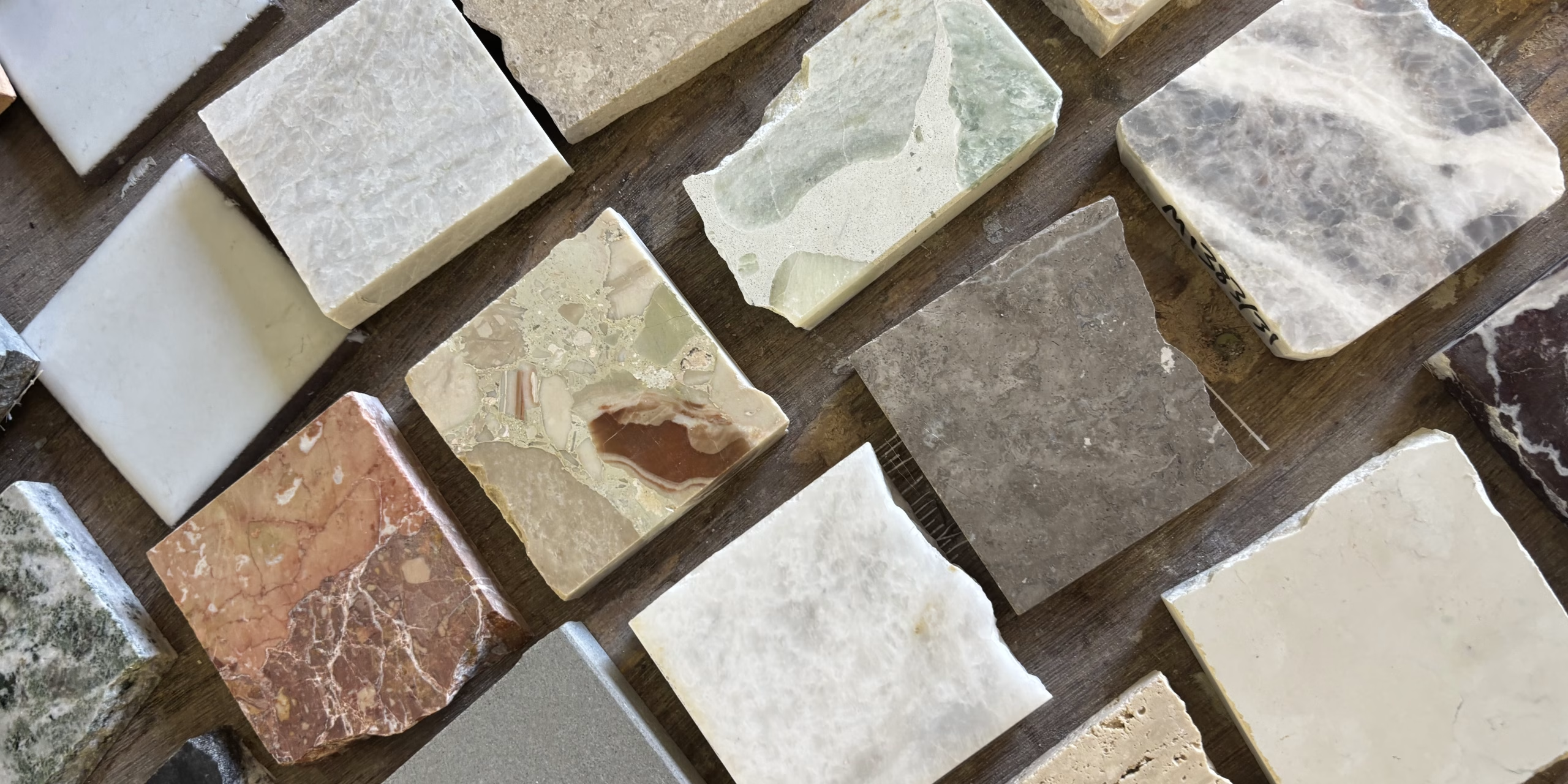
A designer’s guide to natural stone selection for your project
Natural stone offers endless design possibilities, but selecting the right material can be challenging. This article covers the essential considerations to help designers make informed, practical and confident decisions.
Why choosing stone can feel overwhelming
Choosing natural stone for your project may often feel overwhelming at first… particularly when there are countless decisions involved. Balancing aesthetics with practicality, understanding budgets, comparing suppliers, considering maintenance, and making sure the material suits both the design vision and the way the space will be used. It can suddenly feel like a lot to juggle. Costs can also become more complex than first expected. With fabrication, installation, transport, sealing, and lead times often being the less glamorous details, and in some cases, quietly overlooked during the design and planning stage. When timelines are tight or projects involve imported materials, the pressure to make the ‘right’ decision can feel even greater, especially as stone is a permanent feature within a space.
However, while the process may feel overwhelming, it does not need to be difficult. With the right guidance, realistic expectations, and an understanding of what matters most for the project, selecting stone can become a far more straightforward and enjoyable experience as a designer. Taking the time to understand the material properly and not just how it looks, but how it performs, often leads to more confident decisions and ultimately greater design choices.
The first step: understanding the space first, then the stone.
Before falling in love with the slab or finish… there are a few practical questions to ask yourself about your project:
Where and how will the stone be used?
Kitchen, bathroom, or concierge, benchtops, flooring, walls, interior or exterior application, will it be installed in a wet or dry area? How the stone will be used? e.g. a custom stone tabletop... will this have wine glasses, or other food and drinks served on it? Different applications will require different levels of durability, slip resistance and maintenance.
Is the project residential or commercial?
Commercial areas will often require greater durability and maintenance due to the heavier daily use, which leads to the next questions…
How much foot traffic will there be?
Some materials are better suited for residential settings with light foot traffic and may perform very differently if it were to be used in a commercial space with much heavier foot traffic.
What else might the stone be exposed to?
Sunlight, moisture, temperature changes, pool salts and other contaminants can all affect the stones performance and appearance (weathering, staining, fading and safety).
“The same stone can perform beautifully in one application and become a constant maintenance issue in another. Understanding the environment first makes narrowing down your options much easier.”
Its about more than just appearance.
While colours, veining, surface finish and overall aesthetics are the fun part when it comes to selecting stone for your design, there is more to consider beyond the visual appeal. How will the material perform… both after installation and over a long period of time? Factors such as the following, all influence how the stone performs, and will be different for every location and application:
- Slip resistance, particularly for wet areas and external paving.
- Water absorption and porosity.
- Durability and strength.
- Resistance to staining and chemicals.
- How the finish will wear over time.
- Long-term maintenance requirements.
Not all stone is created equal.
With emphasis on the ‘natural’ aspect of stone, it will behave differently every time. While the initial colour and appearance of a stone may guide the selection process, natural stone is a product of geology, meaning each material carries its own unique characteristics, strengths and limitations. Often the colour of stone can reveal important clues about its composition, mineral content and performance. In some cases, even within the same quarry, stone extracted from different locations can vary in colour, veining, density, and overall performance due to natural geological variation.
A stone that performs well as a flooring within dry areas of a residential apartment, may have a different performance as flooring within an area exposed to water or other environmental conditions. Understanding the natural qualities of the material, along with the maintenance and aftercare it may require over its service life, is essential in achieving long lasting, successful design outcomes.
Surface finish matters.
The finish applied to a natural stone can significantly influence its performance, even when the stone itself remains the same. A polished, honed or textured finish can all produce different slip resistance, stain resistance and etching performance, making the finish just as important as the stone selection.
Surface finishes also affect the visibility of scratches, wear, fingerprints and natural variation, meaning the visual appearance of the stone may change over time with use. Selecting an appropriate finish requires balancing the desired aesthetic with the functional requirements of the space to ensure the stone performs as expected throughout its entire service life.
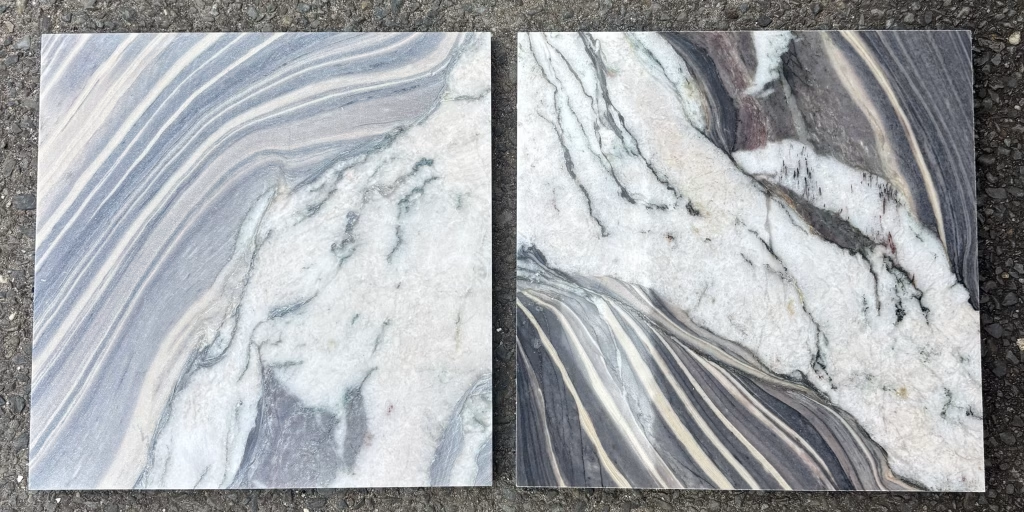
Image 1: The same marble with two different surface finishes. The honed finish (left) produces a softer, matte appearance, while the polished finish (right) enhances colour and veining but also makes etching and surface imperfections more visible.
Testing isn’t a last resort.
Testing isn’t about proving a stone is “good” or “bad”. It’s about understanding how a particular stone will perform in its intended application. Many suppliers already have test data available, but it’s worth confirming the results relate to the exact stone and finish being supplied and not a similar product or a previous project. When in doubt, asking for current testing early in the specification process can prevent the need for redesign, delays and costly surprises later.
Common mistakes, and how to avoid them.
Even the most experienced designers can be caught out when specifying natural stone. While aesthetics often drive the initial selection, we’ve noticed a few common oversights that can lead to costly changes, performance issues or disappointed clients, that can all be easily avoided:
Choosing stone from a small sample only
One of the most common mistakes when selecting natural stone is relying on a single hand sample. While small samples are useful for understanding the general colour and finish, they provide only a limited representation of the stone's overall appearance.
As shown in image 2, the four travertine tiles all originate from the same quarry, and are sold as the same stone, yet each display noticeably different colours, banding and patterns. If you had only been shown one of these tiles, you could easily create a misleading impression of how the installed stone will appear.
This natural variation becomes even more apparent across larger formats such as slabs, where the colour, veining and geological features can change significantly. Whenever possible, view multiple samples, or better yet, inspect the slabs themselves, to ensure the selected material aligns with your design expectations.
Assuming all natural stone is durable
A common assumption is that all natural stone is inherently durable. While many stones are robust, it is important to remember that all materials, including natural stone, has its own physical properties and limitations.
Assuming stones with the same name perform the same
Another misconception is that stone sold under a certain commercial name, must be the same stone as another supplier with the same commercial name. In reality, natural stone can vary significantly between quarries, and any two products with the same name may look very similar but have very different geological formation, therefore perform completely differently.
Avoiding testing
Lastly, arguably the biggest mistake of all… avoiding testing. When specifying stone, sometimes designer or builders rely on historical test reports, results from a previous job or supplier information that may not relate to the exact material being specified. By asking a few extra questions early in the specification process, you can avoid unexpected issues later and give both yourself and your client greater confidence in the final result.
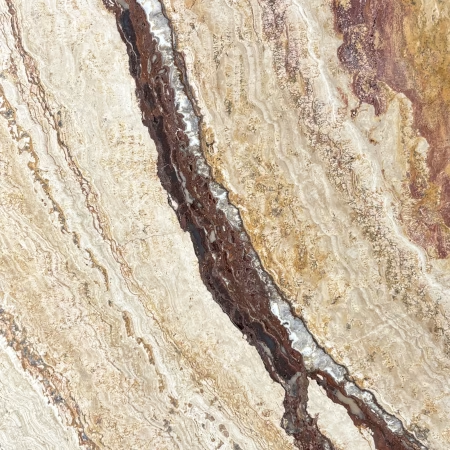
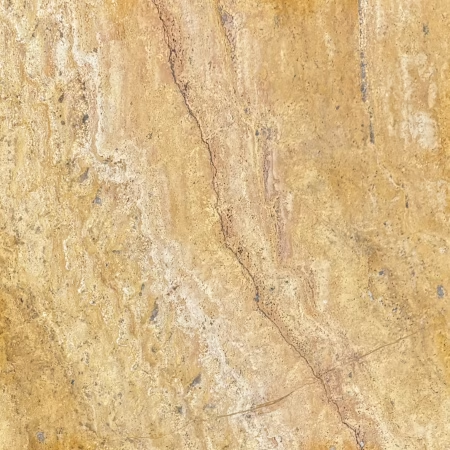
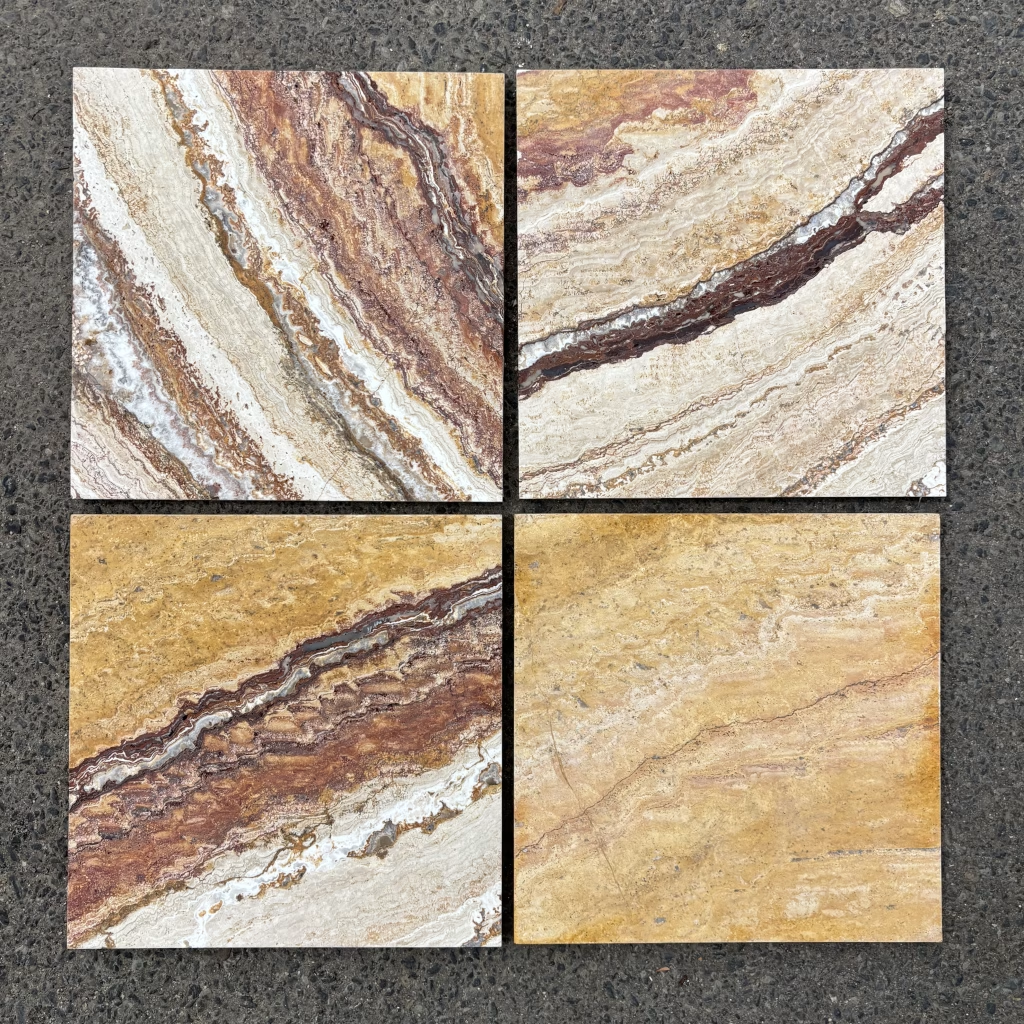
Image 2: The same quarry. The same stone. Four very different looking tiles. Travertine is formed by the deposition of calcium carbonate from mineral-rich water, resulting in natural variations in colour, banding and texture that make every piece unique.
Set realistic expectations.
Confident designers create confident clients. Being able to explain the natural variation in stone, the level of maintenance different materials require and confidently determine why you’ve specified a particular stone type, is the key to good design. Whether it’s a high-maintenance marble or more forgiving, low maintenance quartzite, being able to match the materials to the client’s lifestyle is just as important as matching to the design.
Design smarter, not safer.
Designing with natural stone shouldn’t feel like a compromise, it should feel like an opportunity. The best projects aren’t created by avoiding natural stone because it feels ‘too hard’, they’re created by understanding it. A thorough selection process doesn’t limit creativity, it supports it, giving you the confidence to create spaces that are as durable as they are beautiful.
“There is no perfect stone, only the right one for the space…”
More on natural stone for your project:

Emily Tonkin
Interior Design Graduate / Materials Testing Specialist
Specialising in Finishes Evaluation & Slip Resistance